


From prehistoric humanity all the way to contemporary cultural diversity, anthropologists engage with a wide range of issues and phenomena that affect individual and public life.
Waterloo's Anthropology research and teaching expertise covers three major sub-fields of the discipline: sociocultural anthropology, archaeological anthropology, and biological (physical) anthropology.


News

Recipients of the 2023 Sally Weaver Award
The Department of Anthropology is pleased to announce that Aparajita Bhattacharya and Evengeline Strickland are the recipients of this year’s Sally Weaver Award.
2023 Sally Weaver Guest Lecuture - "After the Revolution: Islam in Post-2011 Egypt"
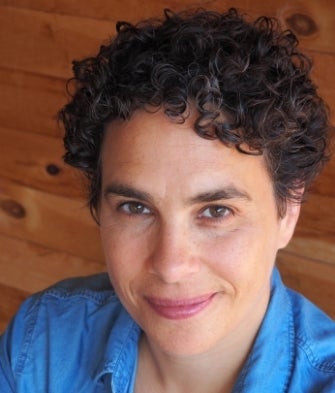
Join the Department of Anthropology, alumni, and friends for the 2023 Sally Weaver Award Guest Lecture:"After the Revolution: Islam in Post-2011 Egypt," presented by Amira Mittermaier, Professor of Religion and Anthropology from University of Toronto.
In the wake of the 2011 uprising, Egypt is both tragically the same and radically transformed. Many former revolutionaries concede that the "revolution has failed." At the same time, they describe having been profoundly impacted by the experience of the revolution. This talk examines how middle-class, cosmopolitan, urban millennials in Egypt are remaking Islam—and reclaiming God—in a troubled post-revolutionary present.
Reception to follow.
When: Tuesday, November 28, 2023 | 5:00 p.m.
Location: Hagey Hall | Room 1101
Ambiguous Archives: Recording a Rohingya Ethnos in Flux - A Talk by Dr. Elliott Prasse-Freeman
Please join us in PAS 2086 at 4:00pm for a talk by Prof. Elliott Prasse-Freeman (Department of Anthropology, National University of Singapore) entitled "Ambiguous Archives: Recording a Rohingya Ethnos in Flux". A short description appears below.
Ambiguous Archives: Recording a Rohingya ethnos in flux
How to preserve and protect key cultural features of an ethnos under threat of erasure when the contours of that ethnos are not well-known? This is the challenge facing the Rohingya, a predominantly Muslim people from the western Myanmar state of Rakhine (Arakan). The Myanmar military-state has deployed direct and structural violence upon them since 1962 – persistent cultural repression interposed by episodes of ethnic cleansing – producing a context in which (1) Rohingya are impelled to assert and demonstrate their indigeneity to the racist and exclusionary Myanmar state even as (2) the Rohingya have had little opportunity to cultivate or know the features of their cultural diversity and collective history. This talk relays findings from fieldwork in Bangladesh camps, where an oral history project explores social structure, political economy, and migration patterns; it also conveys ethnography from Rohingya life in peri-urban Kuala Lumpur, illustrating how life in diaspora has inflected various expressions of Rohingya-ness.
Prof. Elliott Prasse-Freeman is an assistant professor at the National University of Singapore. His first book (Rights Refused, Stanford University Press) conveys how Burmese activists contest Myanmar's authoritarian military regime, while his second book explores Rohingya identity amidst dislocation and mass violence.
